
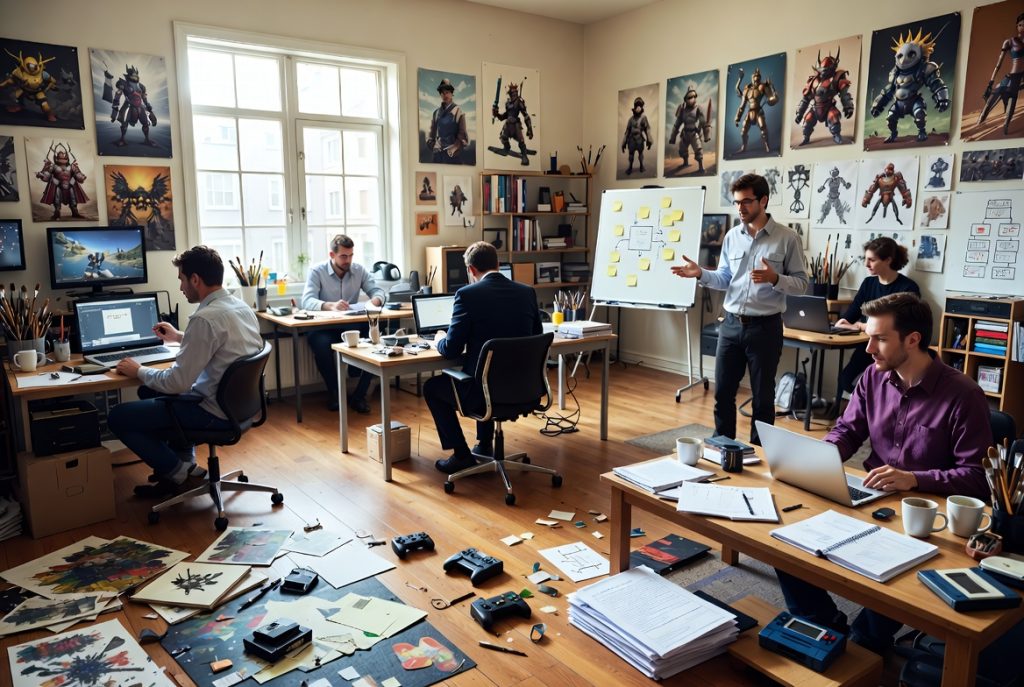
Global spending on video games exceeded $180 billion, showing how central gaming has become to modern culture and technology. Figures from Newzoo confirm that games now rival film and music in both revenue and influence. Yet behind this growth lies a familiar question, who pays to support creative innovation, and who benefits from it?
Spain’s ongoing economic debate offers an unexpected lens. Public opinion has shown rising support for stronger state involvement and targeted levies, including ideas linked to a television tax (impuesto sobre la television) as referenced in recent policy discussions. While traditionally tied to broadcasting, this concept raises a provocative possibility, could a similar funding model help sustain video game development, especially projects that serve cultural or public interests?
A Public Funding Model for Games
The idea of applying a media-style levy to gaming is not as far-fetched as it may seem. Public broadcasting systems in countries like the United Kingdom rely on license fees to fund content that reflects national identity. The BBC, for instance, uses public funding to produce educational and cultural programming that might struggle in purely commercial markets.
Translating this model to gaming could open doors for smaller studios and experimental projects. Independent developers often face limited funding, despite contributing fresh ideas and diverse narratives. Research from the European Audiovisual Observatory suggests that public investment can strengthen local creative industries by reducing financial risk and encouraging innovation.
Such a system could support games that explore history, language, and social issues, areas often overlooked by large publishers focused on global sales. A modest digital media fee, designed carefully, might allow governments to fund projects that enrich cultural storytelling while advancing technology.
Risks of Government Intervention
Despite its appeal, the idea of public funding in gaming raises valid concerns. Critics argue that government involvement could limit creative freedom. When funding depends on public institutions, developers may feel pressure to align with political or cultural expectations. This tension is not new, as debates around publicly funded media have shown.
There is also the issue of bureaucracy. Game development thrives on speed and experimentation, while public funding systems often involve lengthy approval processes. A report by OECD highlights how excessive regulation can slow innovation in digital industries, making it harder for creators to respond to market trends.
Private companies currently dominate the gaming landscape for a reason. Major publishers invest billions in research, marketing, and distribution. Data from Statista shows that top gaming firms generate revenues that far exceed most public cultural budgets. Critics worry that introducing a state-backed funding model could distort competition or discourage private investment.
Moreover, players themselves may resist the idea of a gaming-related public levy. Unlike traditional broadcasting, gaming is often seen as a personal choice rather than a universal service. This distinction complicates efforts to justify a broad-based digital content charge.
A Balanced Path Forward
Still, the debate does not need to end in opposition. A balanced approach could combine public support with market-driven innovation. Rather than imposing a blanket fee, governments could introduce targeted funding programs financed through selective digital service contributions or industry partnerships.
This hybrid model would focus on areas where the market falls short. Indie studios, educational games, and cultural preservation projects could receive grants without placing heavy restrictions on creativity. Examples already exist. Canada’s media fund, supported in part by public contributions, has helped finance interactive digital content while maintaining a strong private sector. Insights from the Canada Media Fund show that mixed funding structures can stimulate growth without undermining competition. At the same time, investing in technical resilience is just as important, as studies on game engine vulnerabilities and exploit analysis reveal how weaknesses in design can affect player trust and long-term success.
Another promising direction involves game preservation. As digital titles age, many risk disappearing due to outdated technology or licensing issues. Public investment could ensure that culturally significant games are archived and accessible, much like films in national libraries. Experts from the Library of Congress emphasize the importance of preserving digital media as part of cultural heritage.
Importantly, any system resembling a broadcast-style levy must remain flexible. It should adapt to the fast-changing nature of gaming, avoiding rigid rules that could hinder innovation. By aligning funding mechanisms with industry needs, policymakers can support creativity while respecting the independence of developers.
Conclusion: Rethinking How Games Are Funded
Spain’s economic discussions highlight a broader shift in how societies think about public investment and digital industries. The concept of a broadcasting-style fee or public media contribution, once limited to television, now intersects with gaming in meaningful ways. While challenges remain, the potential benefits deserve careful consideration.
Video games are more than entertainment. They are cultural artifacts, technological achievements, and social platforms. Supporting their development through thoughtful funding models could lead to richer, more diverse experiences. Whether through a media levy, a digital content charge, or a hybrid funding approach, the goal should remain clear, to foster innovation while preserving creative freedom.
Ultimately, the question is not whether public funding should exist, but how it can be designed to serve both creators and players. By learning from existing systems and adapting them to modern realities, the gaming industry may find new ways to grow, without losing the independence that made it thrive.

